
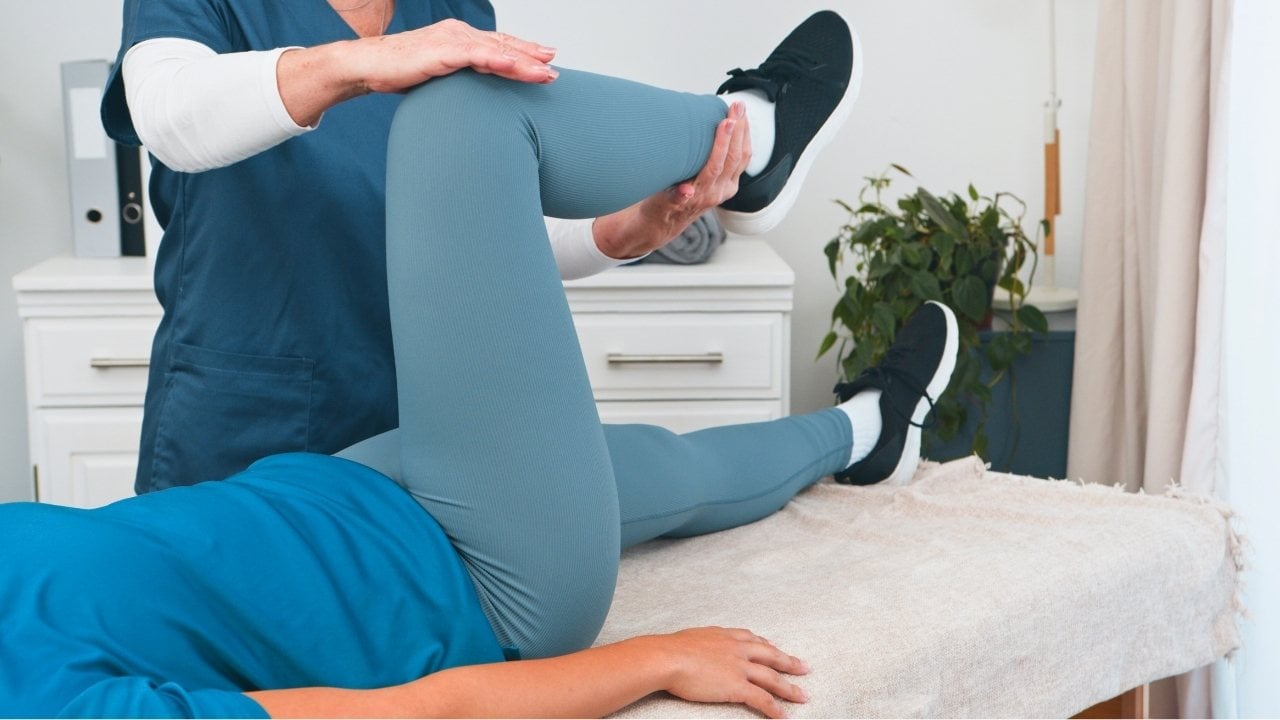
The Methodology of Movement
Sports Massage is a clinical, corrective approach that empowers athletes and active individuals to move beyond the cycle of symptom management toward a state of lasting, self-sustaining results.
Every session is assessment-driven and tailored to the individual’s specific physiology, training goals, and current stress load. Developed and delivered exclusively by Jasmin, our Sports Massage specialist, this methodology integrates several modalities to support long-term balance:
- Clinical & Corrective Massage: Utilizing deep tissue, therapeutic techniques, sports recovery, myofascial release, and trigger point therapy to address postural and movement-pattern restrictions.
- Applied Kinesiology: Incorporating muscle testing and rebalancing to identify the specific compensation patterns affecting pain, performance, and metabolism.
- Microcurrent Therapy & Energy Support: Providing low-level stimulation for tissue recovery alongside reflexology and meridian-based balancing to stabilize the nervous system.
- Supportive Adjuncts: Including assisted stretching, mobility work, and nervous-system regulation to combat the physiological effects of burnout.
Modalities are selected based on unique physiological needs and integrated to support recovery and performance. All techniques are scope-safe and designed to complement medical care, ensuring a professional and holistic approach to body maintenance.
The Athlete’s Competitive Edge
In performance-driven athletics, the margins between a podium finish and the middle of the pack often come down to millimeters and milliseconds. These advantages are won or lost in the efficiency of your recovery.
While training builds the engine and nutrition fuels it, the recovery phase is where actual physiological adaptation happens. Without this essential third pillar of the Performance Trinity, the first two eventually collapse under the weight of repetitive strain.
True athletic progress is found not just in the hours spent training, but in how effectively the body repairs and evolves between sessions. By prioritizing recovery, you choose to work with your physiology rather than against it.
Sports Massage ensures your body doesn’t just survive its training cycle—it builds the soft-tissue resilience necessary for long-term athletic longevity.
Deep Tissue Massage vs. Sports Massage
It is a common mistake to view Sports Massage simply as “Deep Tissue for athletes.” While techniques may overlap, the clinical objective is fundamentally different:
- Deep Tissue/Therapeutic Massage: Addresses the tension patterns that compromise the body’s alignment, such as the restricted mobility following spinal surgery, the shortening of muscles from a desk job, or the daily experience of chronic pain. The intention is to return the body to a state of functional ease.
- Sports Massage: The perspective shifts toward viewing the body as a high-performance system. Jasmin analyzes the unique demands of a sport or activity—such as the rotational torque of a golfer or the eccentric loading of a runner — to identify and treat inherent tissue restrictions, as well as those specific to the presenting situation. The intention is to ensure the body moves at peak efficiency.
The Biomechanics of the Training Cycle
Training intentionally creates micro-tears in muscle fibers to stimulate growth. However, if the recovery phase is incomplete, these micro-tears heal as disorganized “cross-links” in the fascia.
Over time, these cross-links act like glue, preventing muscles from sliding over one another. This is where the “plateau” happens. Jasmin, our Sports Massage specialist, uses techniques to “re-organize” this tissue, ensuring muscles and joints remain mobile throughout the entire training block.
Addressing Metabolic Fatigue and “Heavy Legs”
During intense exertion, the body produces metabolic byproducts like lactic acid and carbon dioxide. While the body is designed to clear these naturally, high-volume training can overwhelm the lymphatic system.
Sports massage facilitates venous return—the process of moving blood back to the heart—and stimulates lymphatic flow. By manually assisting the “flushing” of the limbs, we reduce the duration of Delayed Onset Muscle Soreness (DOMS) and allow a faster return to training.
Periodization: Timing the Treatment
Just as a max-rep squat session is inappropriate the day before a race, deep corrective work must be timed strategically:
- Maintenance Phase: Deep structural work during off-season or build-up weeks to resolve long-standing restrictions.
- Pre-Event Phase (The Stimulus): Applied 24–48 hours before competition for neuromuscular activation. Brisk, rhythmic strokes increase blood flow and “up-regulate” the nervous system for a “primed” feel.
- Post-Event Phase (The Recovery): Applied within 48 hours after a race to “down-regulate” the nervous system, shifting the body from a sympathetic (fight or flight) state into a parasympathetic (rest and digest) state to reduce inflammation.
